
While my eight-year-old daughter was fighting to breathe in intensive care, my mother demanded that I abandon her hospital bedside to attend my younger sister’s gender-reveal party. “Show up or stay out of our lives forever,” she warned. My sister accused my daughter of pretending to be sick for attention, and my relatives called me selfish for missing the celebration. But when my eighty-two-year-old grandfather discovered what had really happened, he made one phone call that changed our family forever. And when he revealed what my mother had secretly been doing with money intended for my daughter, I finally understood why she had been so desperate to keep him away from the hospital.
My name is Monroe Bennett. I’m thirty-eight years old, a licensed electrician, a divorced father, and the proud dad of an eight-year-old girl named Emma.
Until that terrible Thursday morning, I believed I understood what family meant.
I thought family meant showing up for birthdays, helping relatives move, attending holiday dinners, and forgiving the occasional thoughtless remark.
I believed that even when people disappointed one another, there were certain circumstances in which their differences became irrelevant.
A child lying in intensive care should have been one of those circumstances.
I discovered how wrong I was at two o’clock in the morning.
Emma had gone to bed perfectly happy that Wednesday evening.
We’d eaten spaghetti for dinner, watched half of an animated movie, and spent twenty minutes searching for a missing purple sock that she insisted was essential to her sleeping arrangements.
At eight-thirty, I tucked her beneath her favorite yellow blanket.
“Daddy, can we make pancakes on Saturday?” she asked.
“Chocolate chip or blueberry?”
“Both.”
“That’s a very ambitious breakfast order.”
She giggled.
Then she hugged her stuffed rabbit, Mr. Buttons, and closed her eyes.
I kissed her forehead, switched on her little bedside lamp, and went downstairs.
Nothing about that evening suggested that our lives were about to change.
Emma had suffered from asthma since she was four.
We had inhalers, written instructions from her specialist, and a routine for recognizing worsening symptoms.
I’d learned how to listen for changes in her breathing, how to keep track of her medication, and when to seek medical attention.
I thought I was prepared.
But shortly after two in the morning, I heard a strange sound coming from her bedroom.
It wasn’t crying.
It was a desperate, uneven attempt to breathe.
When I opened her door, Emma was sitting upright, gripping her blanket with both hands.
Her face looked frightened.
“Daddy,” she whispered.
She tried to say something else, but couldn’t finish the sentence.
I immediately followed her emergency asthma instructions, but her prescribed rescue medication wasn’t relieving the symptoms.
Within minutes, I knew this was beyond anything we could manage at home.
I called 911.
The ambulance arrived quickly, although those minutes felt endless.
I remember kneeling beside her bed, brushing her hair away from her face and trying to keep my voice steady.
“Look at me, sweetheart. Help is coming.”
Her little fingers wrapped around mine.
“Don’t leave.”
“I won’t.”
I didn’t realize then how often I would repeat those words over the following week.
The paramedics began treating her immediately.
During the ambulance ride, one of them kept checking her breathing while another monitored her condition.
I sat where they directed me, feeling utterly powerless.
At the emergency department, a team of doctors and nurses rushed to stabilize her.
I answered questions about medications, previous attacks, allergies, and recent symptoms.
I showed them the asthma action plan saved on my phone.
Eventually, Dr. Patricia Williams approached me.
She was calm and professional, but her expression told me that Emma’s condition was serious.
“Your daughter is experiencing a severe asthma exacerbation,” she explained. “Her airways are significantly inflamed, and she isn’t responding adequately to her usual treatment. We’re giving her additional respiratory support and monitoring her very closely.”
“Is she going to be okay?”
“We’re doing everything necessary to help her recover. The next several days will be important.”
Those words followed me into the pediatric intensive care unit.
The next several days.
I couldn’t imagine surviving even the next hour.
By five that morning, Emma was receiving specialized breathing assistance.
Wires and monitoring equipment surrounded her hospital bed.
Every change in the monitor’s sound made my stomach tighten.
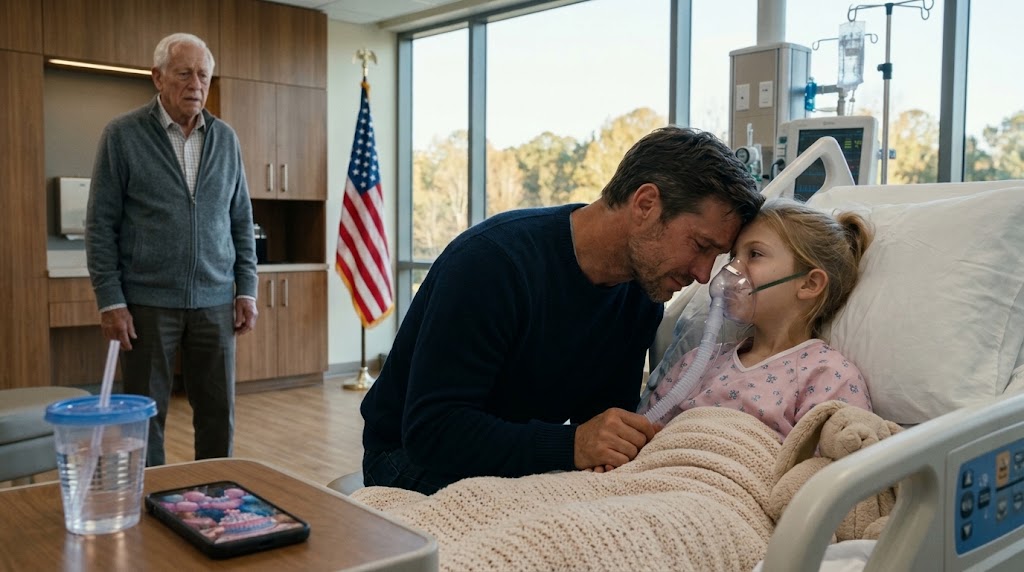
I sat beside her in the same jeans and work shirt I’d been wearing when the ambulance arrived.
When she opened her eyes, she looked for me.
I leaned forward.
“I’m here, peanut.”
She couldn’t speak comfortably, but she squeezed my fingers.
I stayed.
At six-thirty, I called my supervisor, Frank Peterson, who owned the electrical contracting company where I’d worked for eleven years.
“Frank, I’m at the hospital. Emma’s in intensive care.”
He didn’t hesitate.
“Forget about work, Monroe.”
“I’ve got the commercial inspection scheduled for Friday, and the hospital renovation project—”
“Listen to me. You’ve covered enough emergencies for this company. We’ll handle everything here. Your only job is taking care of your girl.”
I nearly cried.
A man who wasn’t related to me had offered more understanding in thirty seconds than most of my family would show during the following four days.
After speaking with Frank, I contacted Emma’s mother, Jessica.
We’d divorced two years earlier.
Our marriage had ended painfully, but we’d developed a workable shared-custody arrangement.
Emma spent alternating weeks with us, and we tried to keep our disagreements separate from her life.
Jessica was attending an out-of-state work conference.
I sent her a message explaining what had happened, followed by the hospital’s contact information.
She replied that she was arranging transportation home.
I assumed she’d come straight to Emma’s bedside.
At the time, I had no reason to think otherwise.
By Thursday afternoon, exhaustion had settled into every part of my body.
I hadn’t eaten anything substantial.
My phone battery was nearly dead.
But I was finally beginning to feel cautiously hopeful because Emma’s breathing had become somewhat more stable.
Then my mother called.
Her name was Linda Bennett.
She was sixty-four, recently retired, and had always believed that keeping up appearances was one of the most important responsibilities a family could have.
My younger sister Stephanie had inherited that philosophy.
At thirty-one, Stephanie had a beautiful house, a successful husband named Derek, and an almost supernatural ability to make every occasion revolve around herself.
Two months earlier, she’d announced her first pregnancy.
The news had genuinely delighted me.
Despite our differences, I was excited about becoming an uncle.
I’d congratulated her, bought a small baby blanket, and promised to help Derek install shelving in the nursery.
When Stephanie decided to organize an elaborate gender-reveal celebration, my mother immediately appointed herself the unofficial event coordinator.
There would be thirty-five guests, professional photographs, elaborate decorations, catering, and a custom cake.
Three weeks before the event, I’d agreed to arrange a chocolate cake from Morrison’s Bakery.
It seemed like a harmless favor.
But Thursday afternoon, as I sat beside Emma’s hospital bed, my phone lit up with Mom’s name.
“Monroe, have you confirmed the cake order?”
I stared at the screen.
“Mom, Emma’s in intensive care.”
There was a brief silence.
Then she said, “I know, sweetheart, but the party is Saturday. Stephanie needs everything finalized.”
“Did you hear what I just said?”
“Yes. You said Emma had another asthma attack.”
“This isn’t an ordinary attack. She’s receiving help to breathe.”
“Well, children have asthma all the time. You can’t let every little medical problem disrupt the entire family’s schedule.”
For several seconds, I couldn’t speak.
“Mom, she’s eight years old.”
“And Stephanie is having her first baby. That’s important too.”
I looked at Emma.
Her little chest rose and fell beneath the hospital blanket.
“I’m not discussing a cake right now.”
“Monroe, don’t be difficult. You made a commitment.”
“I’ll give you Morrison’s number. Someone else can arrange it.”
“That’s not the point.”
“What is the point, then?”
“The point is that your sister deserves one day when everyone makes her feel special.”
I closed my eyes.
“Mom, I have to go.”
She called again that evening.
And again on Friday morning.
Every conversation somehow returned to Stephanie’s party.
Not once did she ask whether Emma was improving.
By Friday afternoon, I had stopped trying to explain the situation politely.
“Mom, I’m not attending the party. Emma is seriously ill. That’s final.”
Her voice changed.
It became sharp and controlled.
“Your sister has spent months planning this celebration.”
“Then I hope she enjoys it.”
“You’ve always found excuses to put Emma ahead of everyone.”
I felt something cold settle inside me.
“She’s my daughter.”
“And Stephanie is your sister.”
“I understand that.”
“Then act like it.”
I stood and walked into the hallway so Emma wouldn’t hear the argument.
“I’m not leaving an eight-year-old child alone in intensive care to attend a party.”
Mom sighed dramatically.
“Your father would have been ashamed of how selfish you’ve become.”
My father had died seven years earlier.
He’d suffered a sudden heart attack while helping a neighbor repair a fence.
Until that moment, I had believed there were certain memories my mother would never weaponize.
Apparently, I was wrong.
“Don’t bring Dad into this.”
“I’m telling you the truth.”
“No, you’re trying to hurt me because I won’t do what you want.”
Her final words were delivered with absolute certainty.
“Show up tomorrow, Monroe, or stay out of our lives forever.”
I stared through the hospital window at the gray afternoon sky.
Then I answered quietly.
“If that’s what you’re choosing, Mom, I’m staying with Emma.”
I ended the call.
For the first time in my life, I didn’t feel guilty about disappointing my mother.
I felt frightened by how little she understood what was happening.
The following morning, Stephanie called.
I answered because I thought that perhaps she’d finally realized the seriousness of Emma’s condition.
Instead, she began with an accusation.
“Are you seriously going to ruin my party over a cake?”
“Good morning to you too, Steph.”
“Mom says you’re refusing to help.”
“My daughter is in intensive care.”
“You keep saying that like nobody understands.”
“Apparently, nobody does.”
She laughed.
Not nervously.
Not sympathetically.
She actually laughed.
“Monroe, children recover from these things. Derek’s cousin had pneumonia last year, and his parents didn’t cancel their anniversary vacation.”
“Those situations aren’t remotely comparable.”
“You always have an excuse.”
“Stephanie, Emma has medical equipment helping her breathe.”
“And I’m pregnant! Do you have any idea how stressful all this arguing is for me?”
I looked toward Emma’s bed.
She was sleeping.
I lowered my voice.
“You called me to complain about a party while your niece is struggling to breathe.”
“Don’t make me sound heartless.”
“Then stop behaving like this.”
She went silent.
When she spoke again, her voice was icy.
“You know what? Don’t come. But don’t expect everyone to pretend you’re a wonderful brother after this.”
I ended the call.
I thought that would be the end of it.
Instead, it was only the beginning.
By Saturday evening, my relatives had transformed Emma’s medical emergency into a family scandal.
Aunt Carol sent a message saying she was disappointed that I couldn’t set aside my personal problems for one afternoon.
My cousin Nathan wrote that Stephanie had worked hard to make her celebration special.
Uncle Paul sent the most infuriating message of all.
“Sometimes children need to understand that family obligations require sacrifices.”
I read it three times.
Emma was eight.
She wasn’t refusing to attend a birthday dinner because she’d rather watch television.
She was lying in a hospital bed, receiving treatment for a potentially life-threatening breathing emergency.
What sacrifice was Uncle Paul expecting her to make?
I typed a long response.
Then I deleted it.
I couldn’t convince people to care about a child if they were determined not to.
Meanwhile, Jessica finally arrived at the hospital.
I expected her to rush toward Emma.
Instead, she stopped in front of me.
“Monroe, we need to talk.”
“Can it wait? She’s exhausted.”
“It’s about her asthma management.”
I frowned.
“What about it?”
“Mom—your mother—said there have been problems with Emma’s medication schedule.”
I stared at her.
“What?”
“She said you’ve been struggling to keep everything organized.”
“Jessica, I’ve taken Emma to every pulmonary appointment during my custody weeks. You have the same treatment records I do.”
“I’m not accusing you. I’m asking questions.”
“You’re asking them because my mother called you.”
She looked away.
That was answer enough.
Then she said something that made the room feel smaller.
“I’ve spoken with my lawyer about whether our custody arrangement needs to be reconsidered.”
For a moment, I couldn’t believe what I’d heard.
“Our daughter is fighting to breathe, and you’re talking about custody?”
“I just want what’s best for Emma.”
“So do I. That’s why I’m sitting here.”
Jessica glanced toward the bed.
Her expression softened, but she didn’t withdraw what she’d said.
“I need to understand exactly what happened.”
I reached into my bag, pulled out the folder containing Emma’s treatment records, and placed it on the chair.
“Then start with the medical facts. Not my mother’s gossip.”
I turned away before my anger could become something Emma would hear.
Jessica eventually sat beside our daughter.
I watched her gently brush Emma’s hair and whisper that Mommy was there.
For a moment, we were simply two frightened parents again.
But after Jessica left that evening, I couldn’t stop thinking about her threat.
My mother had already tried to make me feel guilty for protecting Emma.
Now she appeared to be interfering with my relationship with my daughter’s mother.
And I still didn’t know why.
Sunday morning arrived with pale sunlight filtering through the hospital blinds.
Emma had experienced a difficult night.
Her breathing had improved somewhat, but she remained exhausted, and the doctors weren’t ready to reduce her respiratory support as quickly as we’d hoped.
At six-forty-five, my phone rang.
The screen displayed Derek’s name.
I answered, hoping Stephanie’s husband might finally be calling with some kindness.
Instead, my sister’s voice filled my ear.
“Why did you block Mom?”
I closed my eyes.
“Stephanie, why are you using Derek’s phone?”
“Because you won’t answer anyone!”
“I’m in the hospital.”
“And I’m supposed to feel guilty about that?”
“No. You’re supposed to understand it.”
She launched into a furious description of the previous day’s celebration.
Thirty-five guests had attended.
The decorations were beautiful.
Someone had arranged a replacement cake.
The photographs looked amazing.
But apparently, she’d felt humiliated whenever anyone asked why her older brother wasn’t there.
“I had to keep explaining your ridiculous behavior,” she complained.
“You could have told them the truth.”
“That your daughter had another asthma episode?”
“That she was in intensive care.”
Stephanie sighed.
“Monroe, have you ever considered that Emma knows exactly how to get your attention?”
Everything inside me went still.
“What did you say?”
“I’m just saying that whenever there’s something important happening, she suddenly needs you.”
I looked at my daughter.
Her eyes were closed, and she was holding Mr. Buttons against her chest.
“Emma isn’t pretending to be sick.”
“Remember Christmas two years ago? You left dinner because she supposedly had a fever.”
“She had a temperature of 102 degrees.”
“And the Fourth of July? You left before the fireworks.”
“Because the crowd was overwhelming her, and we needed to get her somewhere quieter.”
“There you go. Another excuse.”
I stood up.
My hands were trembling.
“Stephanie, listen carefully. My daughter is not responsible for your disappointment. She is not pretending to be sick. And if you ever accuse her of manipulating me again, you will not be welcome around her.”
“Wow. You’re really choosing her over everyone.”
“Yes,” I said. “I am.”
Then I hung up.
I blocked the number.
I didn’t feel victorious.
I felt sick.
For years, I’d made excuses for Stephanie.
She was younger.
She was sensitive.
She was accustomed to being the center of attention.
I had told myself that her selfishness was immaturity she’d eventually outgrow.
But she was thirty-one years old.
She was about to become a mother.
And she couldn’t understand why a father would choose his critically ill daughter over a celebration.
By noon, photographs from her party were circulating online.
Pink and blue balloons surrounded an enormous dessert table.
Stephanie and Derek stood beneath a decorative arch, smiling into the camera.
My mother appeared in several pictures, wearing a cream-colored dress and holding a champagne glass.
One caption read, “Family means showing up when it matters.”
Another said, “So grateful for everyone who understands the importance of being there.”
Uncle Paul commented, “Real family never makes excuses.”
I stared at those words.
Then I switched off my phone.
For the first time since Emma’s hospitalization, I walked into the small family waiting room and cried.
Not because I’d missed Stephanie’s party.
Not because I was frightened of losing my place in the family.
I cried because I couldn’t understand how the people who had known Emma since birth could treat her suffering as an inconvenience.
I remembered my mother holding her as a newborn.
I remembered Stephanie buying her first pair of tiny pink shoes.
I remembered Uncle Paul teaching her how to fish during a family vacation.
How had those people become strangers to me?
When I returned to Emma’s room, Dr. Williams noticed my expression.
“You look exhausted, Mr. Bennett.”
“I haven’t been sleeping much.”
“That’s understandable.”
She paused.
“Is there someone supporting you through all this?”
I almost laughed.
Instead, I told her a little about what had been happening.
I didn’t show her the messages.
I simply explained that some relatives believed Emma’s condition wasn’t serious and were angry because I’d missed a family celebration.
Dr. Williams grew quiet.
Then she said something I will never forget.
“Your daughter has required specialized respiratory support for several days. This is not a minor inconvenience or a child seeking attention.”
I nodded.
“She needs to know that the adults around her take her health seriously. You’re doing the right thing by staying.”
Those words mattered more than she probably realized.
Because somewhere beneath my anger, a small part of me had started wondering whether I should have handled everything differently.
Maybe I should have called the bakery earlier.
Maybe I should have sent a gift.
Maybe I could have prevented the arguments.
But sitting beside Emma that afternoon, I understood something.
I wasn’t responsible for making other adults comfortable with my daughter’s illness.
I was responsible for helping her through it.
And there was nothing more important than that.
Later that evening, Emma woke and asked for water.
After the nurse helped her, she looked at me with tired eyes.
“Daddy?”
“Yeah, peanut?”
“Are people mad at you?”
My heart sank.
“Why would you ask that?”
“I heard your phone ringing a lot.”
I pulled my chair closer.
“Some grown-ups are having a disagreement.”
“Because we’re here?”
I didn’t answer quickly enough.
Her eyes filled with tears.
“I’m sorry I got sick.”
Those six words hurt worse than anything my mother had said.
I took her hand.
“Emma, look at me.”
She did.
“You never have to apologize for being sick.”
“But you missed Aunt Stephanie’s party.”
“I missed a party because my daughter needed me. And I’d make that same choice a thousand times.”
“Even if everybody gets mad?”
“Even then.”
She considered that for a moment.
Then she whispered, “I love you, Daddy.”
“I love you more than all the stars in the sky.”
She smiled weakly.
“That’s a lot.”
“It’s not even close to enough.”
I sat with her until she fell asleep.
That night, I made a promise to myself.
Whatever happened with my family, Emma would never grow up believing she had to earn the right to be protected.
On Monday morning, my grandfather called.
Harold Bennett was eighty-two, a retired building contractor who’d spent most of his life working with his hands.
He had raised three children, survived the death of his wife Evelyn, and built a comfortable retirement through decades of careful saving.
He wasn’t particularly emotional.
He didn’t talk about feelings easily.
But when something mattered, he showed up.
His first words were, “How’s my little Emma?”
I nearly broke down.
“She’s still in intensive care, Grandpa.”
There was a long silence.
“She’s where?”
“Pediatric intensive care. She’s been here since Thursday.”
Another silence.
Then he said, very slowly, “Your mother told me Emma had a minor flare-up and was resting comfortably at home.”
I felt my jaw tighten.
“Grandpa, Emma hasn’t been home since the ambulance took her Thursday morning.”
“She said you were exaggerating the whole thing because you were angry with Stephanie.”
“What?”
“She said you refused to attend the party because of a disagreement about the family inheritance.”
I stared at the wall.
“Grandpa, what inheritance discussion?”
He didn’t answer immediately.
“I’m coming to the hospital.”
“You don’t have to—”
“Yes,” he interrupted. “I do.”
Forty-five minutes later, Harold walked into Emma’s room.
He wore his old brown coat and carried a small paper bag from the hospital gift shop.
Inside was a stuffed golden retriever.
He had bought it because he remembered Emma saying she wanted a dog.
But the moment he saw her, he forgot about the toy.
His face changed.
He stood beside the bed, taking in the medical monitors and respiratory equipment.
Then he carefully lowered himself into the chair.
“Oh, sweetheart,” he whispered. “I had no idea.”
Emma opened her eyes.
“Great-Grandpa?”
“Hello, little sunshine.”
She smiled.
“Did you bring me a dog?”
He laughed softly, although his eyes were wet.
“Only the kind that doesn’t need walking.”
He placed the stuffed animal beside Mr. Buttons.
For several minutes, he simply sat there holding her hand.
Then he looked at me.
“Monroe, let’s step outside for a moment.”
I asked the nurse to keep an eye on Emma, and we walked into a quiet family consultation room.
Grandpa closed the door.
“Tell me exactly what happened.”
I told him everything.
The ambulance.
The intensive care admission.
The phone calls about the cake.
My mother’s ultimatum.
Stephanie’s accusations.
The messages from our relatives.
Jessica’s sudden concerns about custody.
I showed him the texts.
He read them carefully.
When he reached the message where my mother threatened to cut me out of the family, his jaw tightened.
When he read Stephanie’s accusation that Emma was seeking attention, he removed his glasses.
“I raised your mother better than this,” he whispered.
Then he looked at me.
“There’s something you need to know about your grandmother’s money.”
I felt confused.
“What money?”
“Before Evelyn died, she and I established a fund for Emma.”
I stared at him.
“Grandma left Emma something?”
“She wanted to make sure your little girl would always have money for education and medical needs. We created a trust and made arrangements for it to be managed until Emma was older.”
I had known Grandma Evelyn adored Emma.
Before she died, she had spent afternoons teaching Emma to bake cookies and telling her stories about Grandpa’s childhood.
But nobody had ever mentioned a trust.
“Why didn’t you tell me?”
Grandpa looked uncomfortable.
“Your mother suggested keeping it private until Emma was older. She said it would be a wonderful surprise when Emma graduated from high school.”
I waited.
“Linda had experience handling family finances,” he continued. “So I appointed her to manage distributions under the trust, with me retaining authority to supervise and replace her if necessary.”
I felt an uneasy sensation in my stomach.
“How much money are we talking about?”
“Originally, eighty-four thousand dollars.”
I stared at him.
“Eighty-four thousand?”
He nodded.
“Your grandmother and I wanted Emma to have a head start in life.”
I leaned against the table.
For years, I’d worked overtime to cover medical copayments and specialist appointments.
I’d repaired our aging car myself.
I’d postponed replacing our worn-out kitchen appliances.
I’d even considered taking a second job to build Emma’s college savings.
And all that time, my mother had known about a fund intended for her needs.
But Grandpa wasn’t finished.
“Your mother told me you’ve been irresponsible with Emma’s money.”
I looked up.
“What money? I didn’t even know the trust existed.”
“That’s what I suspected.”
He opened the leather folder he’d brought with him.
Inside were several pages of financial summaries.
“She claims she’s been using trust funds for Emma’s private respiratory therapy, special educational programs, medical equipment, and home modifications.”
My stomach dropped.
“Grandpa, Emma doesn’t have private respiratory therapy.”
He frowned.
“What about the specialized air-filtration system installed at your house?”
“There isn’t one.”
“And the private tutor?”
“She attends public school. She gets help with reading from her teacher, but we don’t have a private tutor.”
Grandpa slowly turned another page.
I leaned closer.
There were entries showing thousands of dollars in supposed expenses.
Respiratory therapy.
Home air-quality improvements.
Private educational services.
Medical reimbursements.
Every entry had been reported by my mother.
I felt dizzy.
“Grandpa, none of this makes sense.”
He looked at the papers, then back at me.
“I know.”
“Where did the money go?”
His face hardened.
“That’s what we’re going to find out.”
Then he showed me one final document.
It was a letter my mother had sent him two weeks before Emma became ill.
She’d written that I was financially irresponsible, frequently neglected family commitments, and shouldn’t be trusted to manage assets intended for Emma.
At the bottom, she’d recommended that Grandpa change his estate documents to give Stephanie control over the money Emma would otherwise inherit.
I read it twice.
Then a third time.
My mother hadn’t merely been angry about a cake.
She had been building a story about me long before Emma entered the hospital.
And suddenly, her obsession with proving that I was a bad father began to make terrible sense.
For several moments, neither of us spoke.
Then Grandpa reached across the table and placed his hand over mine.
“Monroe, I need you to understand something. I didn’t believe every word your mother said. But I didn’t know she’d been telling you a completely different story.”
I swallowed.
“Why would she want to give Stephanie control of Emma’s inheritance?”
Grandpa looked down at the documents.
“Your mother has always believed Stephanie needs more help than you do.”
I gave a bitter laugh.
“Stephanie lives in a house twice the size of mine.”
“That’s not what I mean, son.”
He hesitated.
“Your grandmother used to say Linda confused protecting Stephanie with protecting her from responsibility.”
I remembered those words because they explained so much of my childhood.
When Stephanie forgot her homework, Mom called the school.
When she wrecked her first car, Mom persuaded Dad to replace it.
When she quit college after one semester, Mom announced that Stephanie was taking time to discover herself.
Meanwhile, when I was nineteen, I worked two jobs to buy my first truck.
At twenty-three, I paid for my electrician certification.
When my marriage ended, I rented a small apartment and rebuilt my finances without asking anyone for money.
My independence had somehow become evidence that I didn’t need help.
And Stephanie’s dependence had become a reason to reward her.
But this wasn’t about two adult siblings anymore.
It was about an eight-year-old girl whose great-grandparents had tried to protect her future.
“Grandpa, what do we do now?”
He carefully closed the folder.
“First, we make sure Emma gets better. Then we get an accurate accounting of every dollar.”
He explained that his longtime attorney, Margaret Ellis, had helped establish the trust.
The documents allowed him to request its financial records and remove my mother from her position as trustee under specified circumstances.
He intended to speak with Margaret that afternoon.
“Please don’t start a war because of me,” I said.
Grandpa looked genuinely surprised.
“Monroe, this isn’t a war because of you. This is a responsibility I’ve neglected.”
He paused.
“Your grandmother trusted me to make sure that little girl was protected. I’m not going to disappoint Evelyn now.”
He returned to Emma’s room and stayed another hour.
Before leaving, he bent down and kissed her forehead.
“Great-Grandpa will be back tomorrow, sunshine.”
“Can you bring another dog?”
He smiled.
“Let’s see how well you take care of the first one.”
For the first time in days, I laughed.
That evening, something unexpected happened.
Jessica returned to the hospital carrying a small overnight bag.
She looked tired, and her eyes were red.
“Can we talk?” she asked.
I immediately felt defensive.
“If this is about custody—”
“It isn’t.”
She sat across from me.
“I spoke with Dr. Williams today. She explained the treatment Emma has received and how serious this attack was.”
I waited.
Jessica took a shaky breath.
“I also reviewed Emma’s appointment records. You were right. You’ve been consistent with her care.”
“Of course I have.”
“I know.”
“Then why did you threaten to change custody?”
She looked toward our daughter’s bed.
“Because I was scared, Monroe. And because your mother called me before I arrived.”
I felt my anger returning.
“What did she tell you?”
“That you’d been missing appointments, that Emma’s medications weren’t being managed properly, and that you’d been refusing help from the family.”
None of it was true.
Jessica continued.
“She said you’d become so preoccupied with proving you were a good father that you weren’t listening to anyone else.”
I shook my head.
“She’s been trying to convince Grandpa of almost the same thing.”
Jessica looked up.
“Why?”
“I think money is involved.”
I explained the trust and the suspicious financial summaries.
Her expression shifted from confusion to disbelief.
“Are you telling me your mother may have been using money intended for Emma?”
“We don’t know everything yet. Grandpa’s attorney is looking into it.”
Jessica covered her mouth.
For a long moment, she said nothing.
Then she whispered, “I’m sorry.”
I looked away.
“I needed you to be Emma’s mother this weekend, Jessica. Not another person questioning whether I deserved to be her father.”
Tears filled her eyes.
“You’re right.”
She didn’t make excuses.
She didn’t ask me to forget what she’d said.
Instead, she offered to stay overnight so I could shower, eat something, and sleep for a few hours.
I resisted at first.
But then Emma woke and smiled when she saw her mother.
“Mommy, are you staying?”
Jessica took her hand.
“I’m staying, sweetheart.”
I realized that I didn’t have to carry everything alone.
I also realized that accepting help from Emma’s other parent wasn’t a weakness.
It was what responsible parents were supposed to do.
The next morning, Tuesday, Grandpa returned with a thermos of homemade chicken soup.
He said he’d followed Grandma Evelyn’s recipe, although he admitted he’d probably added too much pepper.
Emma was showing small but encouraging signs of improvement.
Her doctors had begun gradually reducing the respiratory assistance she needed.
She was still weak, but she could speak more comfortably.
When Grandpa entered, she immediately lifted the stuffed golden retriever.
“I named him Biscuit.”
“That’s a fine name.”
“Mr. Buttons is his brother.”
“Sounds like a respectable family.”
Grandpa smiled, but I noticed he was carrying another folder.
Once Emma was settled, he asked me to step outside.
His attorney had reviewed the trust’s financial summaries and requested the supporting account records.
What she’d found was troubling.
Several large withdrawals had been categorized as reimbursements for Emma’s supposed medical and educational expenses.
But the documentation supplied by my mother didn’t match the descriptions.
One payment of $8,400 had supposedly covered respiratory equipment and home improvements.
Another $6,700 had allegedly paid for private educational services.
Additional transfers were listed as medical reimbursements.
Together, the questionable withdrawals totaled nearly $30,000.
Margaret was still reviewing the records and wasn’t prepared to make accusations without completing her investigation.
But Grandpa had already confirmed one important thing.
The medical equipment my mother claimed to have purchased didn’t exist.
Neither did the private tutor.
“Margaret says we need to establish where the money actually went,” Grandpa explained.
I stared at the numbers.
Almost thirty thousand dollars.
That was more than I earned during several months of full-time work.
I thought about the weekends I’d spent taking extra electrical jobs.
The birthday vacations I’d postponed.
The nights I’d sat at the kitchen table calculating whether I could afford another specialist copayment.
And all the while, my mother had been reporting expenses that had never occurred.
“What happens if she took it?” I asked.
“Then she’ll have to account for it and repay what she improperly used. Margaret will explain the legal options once we know the facts.”
I nodded.
Grandpa put the folder away.
“There’s something else.”
My stomach tightened.
“Your mother called me last night.”
“What did she want?”
“She wanted me to sign documents transferring my lakeside property into an arrangement that would eventually benefit Stephanie.”
I stared at him.
“The cottage?”
Grandpa owned a modest but valuable lakeside property that had been in our family for decades.
As children, Stephanie and I had spent summers swimming from its wooden dock.
Grandma Evelyn had loved that place.
It was where she’d taught Emma to skip stones.
“She said Stephanie and Derek would make better use of it,” Grandpa continued. “Apparently, she’d been discussing renovations with them.”
“Did you agree?”
“No.”
He paused.
“Especially after she suggested that your absence from the gender reveal proved you couldn’t be trusted with family responsibilities.”
I felt sick.
My mother had known that Emma was hospitalized.
She’d known I wasn’t attending Stephanie’s party because I refused to leave my daughter.
And she’d apparently used my absence as evidence that I was unworthy of my grandfather’s trust.
It wasn’t just cruelty anymore.
It was calculated.
That afternoon, Grandpa instructed Margaret to begin the formal process for reviewing the trust’s administration and replacing my mother as trustee if the findings justified it.
He also decided to postpone any changes to his estate plan until he understood exactly what had happened.
He didn’t ask for my approval.
He simply told me what he intended to do.
“For too long,” he said, “I’ve allowed Linda to make decisions because I didn’t want arguments. Your grandmother used to handle these things, and after she passed, I let your mother take over.”
His voice grew quieter.
“I think I’ve confused keeping peace with doing what’s right.”
I understood that more than he knew.
Because I’d spent most of my adult life doing exactly the same thing.
On Wednesday morning, Mom finally arrived at the hospital.
I was standing near the nurses’ station when I saw her walking down the corridor.
She wore a blue cardigan, carried an expensive handbag, and looked irritated rather than concerned.
“Monroe, we need to talk.”
I glanced toward Emma’s room.
“Not here.”
“Your grandfather is causing unnecessary trouble.”
I couldn’t believe she’d said that before asking about Emma.
“Good morning, Mom. Emma is improving. Thank you for asking.”
She frowned.
“Don’t be sarcastic.”
“You came to the pediatric intensive care unit and your first concern was Grandpa.”
“Because he’s accusing me of terrible things.”
“Is he?”
“Your grandfather is elderly. He’s confused. And now you’re filling his head with nonsense.”
I felt my voice harden.
“Grandpa knows exactly what’s happening.”
“You’ve always been good at making people feel sorry for you.”
I stared at her.
For the first time, I saw my mother without the excuses I’d spent thirty-eight years making for her.
I saw someone who could stand outside her granddaughter’s hospital room and complain about her own reputation.
“Did you take money from Emma’s trust?”
Her expression changed.
Only slightly.
But I noticed.
“That’s family business.”
“Emma is family.”
“You don’t understand how complicated finances can be.”
“Then explain.”
She folded her arms.
“Stephanie needed help with some expenses. I moved money around temporarily. Everything was going to be replaced.”
I felt the floor disappear beneath me.
“You used Emma’s money to help Stephanie?”
“Don’t twist my words.”
“Then tell me exactly what you did.”
She glanced around the corridor.
“Lower your voice.”
I hadn’t raised it.
“Mom, did you use money intended for Emma’s medical care and education?”
Her silence was answer enough.
Finally, she said, “You have no idea how much pressure I’ve been under.”
I stared at her.
“You’re talking about pressure while your granddaughter is recovering from a medical emergency.”
“Everything always comes back to Emma with you!”
“Yes,” I said. “Because she’s my daughter.”
Mom shook her head.
“This is why Stephanie feels neglected. You’ve made everyone believe your little family is more important than the rest of us.”
I felt something inside me finally settle.
For years, her disapproval had made me question myself.
Not anymore.
“Emma is not competing with Stephanie,” I said. “She’s a child. Stephanie is an adult. There shouldn’t be a competition.”
Mom opened her mouth.
I continued.
“And whatever happened to Grandma’s money, Grandpa’s attorney can handle it. I’m not going to argue with you in this hospital.”
“You’re really going to let your grandfather drag this family through a legal dispute?”
“If that’s what it takes to protect Emma’s future, yes.”
Her expression hardened.
“You’ll regret turning your back on us.”
I looked at the door to Emma’s room.
“No, Mom. I regret how long I spent teaching my daughter that people who hurt us should be excused just because they’re relatives.”
Then I walked away.
Mom didn’t follow.
She never entered Emma’s room.
That was the moment I stopped hoping she would suddenly become the grandmother Emma deserved.
By Thursday afternoon, Emma had improved enough for her doctors to discuss discharge planning.
Her respiratory support had been gradually discontinued, and the medical team wanted to make sure she remained stable before sending her home.
Jessica and I met with Dr. Williams to review the updated asthma action plan.
We discussed medications, warning signs, follow-up appointments, and what to do if Emma’s symptoms worsened again.
Jessica took notes.
So did I.
Neither of us mentioned custody.
Our daughter needed both of us focused on her recovery.
When the doctor finally confirmed that Emma could go home with appropriate follow-up care, I felt an enormous weight lift from my chest.
Emma was delighted.
“Can Biscuit ride in the front seat?”
“He has to follow the safety rules,” I said.
She giggled.
“Daddy, he’s a stuffed dog.”
“Exactly. Very difficult to reason with.”
Jessica laughed.
For the first time in a week, the three of us shared an ordinary moment.
Grandpa arrived with flowers for the nurses and a card thanking the medical team.
He helped carry Emma’s belongings to the car.
Before we left, Dr. Williams shook my hand.
“She’s made good progress. Just keep following the plan and contact her care team if anything concerns you.”
I thanked her.
Then I looked back at the hospital building.
Seven days earlier, I’d arrived terrified that I might lose my daughter.
I was leaving with her beside me.
Nothing else seemed nearly as important.
But the situation with my family wasn’t over.
On Friday evening, Grandpa called.
Margaret had completed an initial review of the trust transactions.
The records showed that my mother had transferred $29,600 from the trust into accounts under her control while reporting expenses supposedly incurred for Emma.
The supporting invoices were either missing, unrelated, or inconsistent with the services described.
Some of the transferred funds had subsequently been used toward Stephanie’s home renovations and expenses surrounding the gender-reveal celebration.
Grandpa was furious.
But Margaret had cautioned him not to make public accusations until the accounting and repayment issues were addressed through the appropriate legal process.
She was preparing formal demands for records and restitution.
Grandpa had also exercised the removal powers available to him under the trust documents, with the necessary notices and banking changes being handled through his attorney.
An independent professional trustee would oversee the remaining money once the transition was complete.
I sat at my kitchen table listening.
Emma was asleep upstairs.
Jessica had gone home after helping organize the medications and appointments.
Outside, rain tapped against the windows.
“Grandpa,” I finally said, “I never wanted any of this.”
“I know, son.”
“I just wanted my mother to care that Emma was sick.”
His voice softened.
“I know that too.”
Then he told me something unexpected.
He wanted the family to meet at his house the following afternoon.
Not because he expected everyone to reconcile.
Not because he wanted me to apologize.
He wanted to address the lies directly.
“I won’t force you to attend,” he said. “But I believe your mother needs to hear the truth with everyone present.”
I hesitated.
Part of me wanted nothing to do with another family gathering.
Then I thought about the messages, the accusations, and the people who had believed them without asking a single question.
“All right,” I said. “I’ll come.”
Jessica offered to stay with Emma while I went.
That Saturday, I drove to Grandpa’s house.
I’d been there hundreds of times before.
As a child, I’d run through the backyard.
As a teenager, I’d helped Grandpa paint the porch.
After Grandma died, I’d spent weekends repairing the gutters and mowing the grass.
But I’d never felt so nervous walking through his front door.
Mom was already sitting in the living room.
Stephanie sat beside Derek, her arms folded tightly across her chest.
Uncle Paul stood near the fireplace.
Aunt Carol and two cousins occupied the sofa.
Everyone looked uncomfortable.
Grandpa sat in his favorite armchair.
A leather folder rested on the table beside him.
Margaret Ellis was there too.
She’d come at Grandpa’s invitation to clarify the financial and trust matters, not to turn the gathering into a courtroom.
When I entered, Mom looked away.
Stephanie glared.
Grandpa stood.
“Thank you for coming, Monroe.”
I nodded.
He gestured toward an empty chair.
Then he addressed the room.
“I want to begin by telling everyone something you should have known last week.”
He paused.
“Emma was admitted to pediatric intensive care early Thursday morning after a severe asthma attack. She required specialized respiratory support and spent several days under close medical supervision.”
Aunt Carol looked startled.
“Intensive care?”
“Yes,” Grandpa replied.
Uncle Paul frowned.
“Linda told us it was a minor episode.”
Grandpa looked directly at my mother.
“That wasn’t true.”
Mom shifted in her seat.
“I didn’t want everyone panicking.”
Grandpa’s voice remained calm.
“Then you should have told them the facts instead of inventing your own.”
Stephanie interrupted.
“Mom said Monroe was making everything sound worse because he didn’t want to come to my party.”
I looked at her.
“Stephanie, I told you exactly where Emma was.”
She opened her mouth.
Then closed it.
Grandpa continued.
“Monroe stayed with his daughter because she needed him. He didn’t neglect his family. He fulfilled his most important responsibility as a father.”
Uncle Paul stared at the floor.
Aunt Carol covered her mouth.
But Mom folded her arms.
“Harold, this is completely unnecessary.”
“No, Linda,” Grandpa said. “What’s unnecessary is making a father defend staying beside his critically ill child.”
The room fell silent.
Then Grandpa opened the folder.
“There’s another matter.”
My mother’s face went pale.
Margaret explained the trust Grandma Evelyn and Grandpa had established for Emma.
She described its purpose, the responsibilities of a trustee, and why withdrawals needed to be supported by accurate records.
She didn’t distribute confidential bank statements around the room.
But with Grandpa’s permission, she confirmed that significant discrepancies had been identified and were being formally investigated.
Mom immediately became defensive.
“I already explained that money was borrowed temporarily.”
Margaret spoke carefully.
“Funds held in trust for a beneficiary can’t simply be borrowed for unrelated purposes without proper legal authority. Those transactions require a complete accounting.”
Stephanie looked from Mom to Grandpa.
“What money?”
Grandpa frowned.
“The money your grandmother and I set aside for Emma.”
Stephanie seemed genuinely confused.
“What does that have to do with me?”
Mom whispered, “Stephanie, please.”
But Derek had leaned forward.
“Linda, is this about the money you gave us for the kitchen renovation?”
Nobody answered.
He looked at Stephanie.
“You said your mother had some savings set aside.”
Stephanie’s face changed.
“Mom?”
Grandpa’s expression was devastated.
“Linda, please tell me you didn’t use Emma’s trust to finance Stephanie’s renovations.”
My mother began crying.
“I was going to put it back.”
Derek stood.
“You told us it was a gift.”
“It was supposed to be temporary!”
“You never said anything about Emma,” Stephanie whispered.
For the first time since the hospital ordeal began, my sister looked genuinely shaken.
I wanted to believe she hadn’t known where the money originated.
But I also remembered every cruel word she’d spoken about my daughter.
Not knowing about the money didn’t excuse that.
Grandpa slowly removed his glasses.
“Linda, Evelyn trusted you.”
Mom wiped her cheeks.
“I’ve spent my whole life trying to keep this family together.”
“No,” Grandpa answered. “You’ve spent too much of it deciding whose feelings matter and whose don’t.”
He looked toward Stephanie.
“Your brother missed a celebration because his daughter was in intensive care. And instead of asking how she was, all of you punished him for it.”
Stephanie looked down.
Grandpa continued.
“Then you used his absence to argue that he should lose his place in my estate plans.”
Aunt Carol turned sharply toward my mother.
“You said Monroe was demanding money from Harold.”
I shook my head.
“I didn’t even know there was a trust.”
Uncle Paul spoke quietly.
“Linda told us you’d threatened to stop visiting Harold unless he changed the inheritance arrangements.”
I stared at him.
“That’s completely false.”
Grandpa nodded.
“Monroe has never asked me to change my will.”
He looked around the room.
“And while we’re discussing my estate, let me make something perfectly clear. My property is not a reward for whichever relative flatters me most. I’ll decide how to provide for my family based on my own judgment and advice from my attorney.”
Mom lowered her head.
Grandpa continued.
“I’m eighty-two years old, not incapable of understanding what’s happening around me.”
Nobody spoke.
Then he said something that changed the atmosphere completely.
“Evelyn and I saved money because we wanted our descendants to have opportunities we never had. We didn’t do it so one generation could take from the next.”
His voice cracked.
“Emma is eight years old. She shouldn’t have to worry about money, family arguments, or whether the people who claim to love her believe she’s really sick.”
I felt tears gathering in my eyes.
Grandpa looked at me.
“Monroe, I’m sorry I didn’t ask questions sooner.”
I shook my head.
“You came when you found out.”
He nodded.
“And I should have found out sooner.”
For several seconds, silence filled the room.
Then Uncle Paul cleared his throat.
“Monroe, I owe you an apology.”
I looked at him.
He appeared deeply embarrassed.
“I sent you something I shouldn’t have. I took Linda’s version of events without speaking to you.”
“Yes,” I said. “You did.”
He nodded.
“I should have called and asked about Emma.”
“Yes.”
“I’d like to make that right.”
I didn’t know what to say.
Because apologies were easier than rebuilding trust.
Finally, I answered, “Start by understanding what happened. Don’t ever tell someone that a sick child should sacrifice medical care for a party.”
He lowered his head.
“I won’t.”
Aunt Carol apologized too.
She admitted she’d been more concerned about avoiding family tension than finding out the truth.
My cousins looked ashamed.
But Stephanie remained silent.
Eventually, Derek turned toward her.
“Steph, you need to say something.”
She stared at me.
“I didn’t know Mom had used Emma’s money.”
“I believe you,” I said.
Her expression softened.
Then I continued.
“But you knew Emma was in intensive care. I told you myself.”
Tears appeared in her eyes.
“I was upset.”
“So was I.”
“My party was important to me.”
“And Emma’s life is important to me.”
She looked down.
“I didn’t think it was that serious.”
“Then you should have asked.”
She began crying.
For years, seeing Stephanie cry had been my signal to apologize, surrender, and make everything better.
This time, I didn’t.
Grandpa quietly handed her a tissue.
“Stephanie, becoming a mother means learning that another person’s needs sometimes matter more than your plans.”
She pressed the tissue against her eyes.
“I know.”
“I hope you do,” he replied.
Mom suddenly stood.
“So that’s it? Everyone gets to blame me?”
Grandpa looked tired.
“Linda, no one forced you to make those withdrawals. No one forced you to lie about Emma’s condition. And no one forced you to threaten Monroe.”
“I was trying to help Stephanie!”
“By hurting Emma?”
Mom had no answer.
Margaret explained that the trust’s financial issues would be handled through formal accounting, restitution demands, and further legal action if necessary.
Grandpa said the family shouldn’t expect him to ignore what had happened simply to prevent embarrassment.
Mom picked up her handbag.
“You’re choosing him over your own daughter.”
Grandpa looked at her with profound sadness.
“No, Linda. I’m choosing to stop excusing behavior that harms people we love.”
She left without another word.
I watched the front door close.
For decades, I had feared the moment my mother might decide she was finished with me.
Now it had happened.
And strangely, I felt more relieved than frightened.
After everyone else departed, I stayed to help Grandpa clean up.
We carried cups into the kitchen and put away the untouched sandwiches he’d prepared.
For several minutes, neither of us spoke.
Then Grandpa said, “Your grandmother would have liked the way you stood up for Emma.”
I looked at him.
“Would she?”
He nodded.
“She always said you had your father’s stubborn streak.”
I smiled.
“Dad used to say I got it from you.”
Grandpa chuckled.
“Probably true.”
Then his expression softened.
“Monroe, I want you to understand something else. I didn’t establish that trust because I thought you couldn’t provide for Emma.”
“I know.”
“We did it because we loved her. And because love means planning for the days when you might not be around to help.”
I felt my throat tighten.
“Thank you, Grandpa.”
He squeezed my shoulder.
“Take care of that little girl. That’s all Evelyn and I ever wanted.”
Over the following weeks, life slowly returned to something resembling normal.
Emma attended her follow-up appointments.
Jessica and I worked together to maintain a consistent medication schedule and to keep both households prepared for future asthma emergencies.
We shared updated medical information, reviewed her treatment instructions, and agreed that neither of us would allow other relatives to interfere with decisions about her health.
Jessica also told me she’d withdrawn the suggestion of changing our custody arrangement.
We weren’t getting back together.
Our marriage had ended for reasons neither of us could erase.
But we’d finally begun communicating like partners in the one responsibility that would always connect us.
Raising Emma.
Grandpa continued working with Margaret to protect the trust.
My mother’s removal as trustee was completed through the necessary legal procedures.
The remaining assets were placed under independent management.
Margaret pursued a formal accounting of the disputed withdrawals and worked with the appropriate parties toward repayment.
The financial damage wasn’t corrected overnight.
Some funds had already been spent, and recovering them required time and difficult negotiations.
Grandpa refused to pretend otherwise.
But he also refused to let the missing money endanger Emma’s future.
He arranged for her continuing medical and educational needs to be considered in his updated financial plans, with professional oversight to prevent another relative from misusing those assets.
Mom initially refused to cooperate.
She accused Margaret of turning Grandpa against her.
She complained that I had embarrassed her.
She told relatives I was trying to destroy the family.
But the records didn’t disappear because she disliked them.
Eventually, after receiving formal demands from the attorney, she agreed to a repayment arrangement that would require significant changes to her finances.
Stephanie and Derek also became involved in resolving the money they’d received without knowing its source.
Derek was furious when he discovered the truth.
He called me one evening and apologized.
“I wouldn’t have accepted a penny if I’d known it belonged to Emma.”
I believed him.
He’d always been decent to me.
I told him I appreciated his honesty.
But I also explained that financial repayment couldn’t erase Stephanie’s treatment of my daughter.
He understood.
“I’ve told her that,” he admitted.
The next several months weren’t easy for Stephanie.
Her relationship with Mom became strained.
The pregnancy continued, but the excitement surrounding the baby was complicated by the fallout from the trust investigation.
She called me several times.
At first, her apologies focused on how badly everything had turned out.
She said she’d been embarrassed.
She said the family meeting had been humiliating.
She said she couldn’t believe Grandpa had exposed the financial problems.
I listened.
Then I asked one question.
“Stephanie, have you thought about what Emma experienced?”
She became quiet.
“Of course.”
“Then what was she supposed to think when her aunt accused her of pretending to be sick?”
“I didn’t mean it like that.”
“How else could you have meant it?”
She started crying.
I didn’t comfort her.
I wasn’t cruel.
I simply refused to take responsibility for making her feel better about something she’d chosen to do.
A few weeks later, Stephanie called again.
This time, her voice sounded different.
“I’ve been thinking about what you said.”
I waited.
“I keep imagining my baby being in the hospital. I keep imagining someone telling Derek that he should leave our child alone because there was a party.”
She paused.
“I don’t know how I could have said those things to you.”
For the first time, she wasn’t explaining her behavior.
She was acknowledging it.
“I’m sorry, Monroe,” she whispered. “And I’m sorry I treated Emma like she was an inconvenience.”
I closed my eyes.
“Thank you.”
“Do you think we can fix things?”
“Maybe. But it’s going to take time.”
She accepted that.
And for once, she didn’t argue.
Mom’s response was different.
She sent one long message accusing me of breaking the family apart.
According to her, everything would have been fine if I’d simply attended Stephanie’s party for an hour.
I read that sentence several times.
Then I replied.
“Mom, Emma needed intensive care. There was never a reasonable expectation that I should leave her for a party. You lied about her condition, questioned my parenting, and mishandled money intended for her future. Those are your decisions, not mine. Until you accept responsibility, we need distance.”
She didn’t respond.
For a while, that silence hurt.
I missed the mother I’d believed I had.
I missed calling her on Sunday afternoons.
I missed bringing Emma over for dinner.
I missed the version of our family I’d spent years imagining.
But I began to understand that missing someone didn’t mean allowing them to hurt us again.
Grandpa became a regular visitor.
Every Wednesday, he arrived with something for Emma.
Sometimes it was a book.
Sometimes it was a puzzle.
Sometimes it was a bag of groceries because he’d decided I wasn’t eating enough vegetables.
Emma adored him.
One afternoon, while they were building a model birdhouse at our kitchen table, she asked a question that caught me off guard.
“Great-Grandpa, why did everybody get so mad when I was sick?”
I froze.
Grandpa carefully set down his little hammer.
He looked at her for a moment.
Then he said, “Sometimes grown-ups make very foolish decisions, sunshine.”
“Because of me?”
“No.”
He shook his head.
“Never because of you.”
She considered that.
“Daddy says I don’t have to say sorry for being sick.”
“Your daddy is right.”
She smiled.
“Even if I miss a party?”
Grandpa chuckled.
“Especially if you miss a party.”
Then he leaned closer.
“Do you know what your great-grandmother used to say?”
Emma shook her head.
“She said that people who love you should make your difficult days easier, not harder.”
Emma thought about that for a moment.
Then she wrapped her arms around Grandpa’s neck.
“I think Great-Grandma was really smart.”
Grandpa closed his eyes.
“She certainly was.”
I turned toward the kitchen sink so they wouldn’t see me crying.
Three months after the hospitalization, Emma returned to her usual activities with her doctors’ guidance.
She went to school, spent afternoons drawing pictures, and resumed arguing with me about bedtime.
Her laughter filled our small house again.
I no longer took that sound for granted.
Then, one Saturday morning, she asked if we could make pancakes.
“Chocolate chip or blueberry?” I asked.
She grinned.
“Both.”
I laughed.
It was the same request she’d made the night before the ambulance arrived.
But this time, standing in our kitchen, I felt the enormous privilege of being able to answer it.
“Both it is.”
We made a terrible mess.
There was flour on the counter, chocolate on Emma’s cheek, and blueberry juice dripping down the side of the stove.
We laughed until my stomach hurt.
Halfway through breakfast, the doorbell rang.
Grandpa stood outside carrying a small wrapped package.
He’d brought Emma a new storybook.
She hugged him and dragged him into the kitchen.
“Great-Grandpa, we’re making pancakes!”
He looked at the flour-covered counter.
“I can see that.”
“Daddy says I’m the chef.”
“Then who’s responsible for cleaning up?”
She considered the question.
Then pointed at me.
“Daddy.”
Grandpa laughed so hard he had to hold the doorframe.
We sat together for breakfast.
No arguments.
No accusations.
No demands.
Just three people sharing pancakes on a Saturday morning.
A few weeks later, Stephanie gave birth to a healthy baby girl.
She named her Olivia.
She sent me a photograph and a short message.
“I finally understand what you meant. I would do anything to protect her. I’m sorry it took becoming a mother for me to understand what you were going through.”
I looked at the photograph for a long time.
Olivia had tiny fingers, round cheeks, and a peaceful expression.
She was innocent of everything that had happened.
I congratulated Stephanie.
I sent a baby gift.
But I didn’t pretend our relationship had returned to what it once was.
We began rebuilding it slowly.
With boundaries.
With honest conversations.
And with the understanding that Emma would never again be treated as less important than another family member’s convenience.
Mom remained distant.
Eventually, she sent a letter.
It wasn’t a perfect apology.
She still tried to explain some of her decisions.
She still seemed uncomfortable accepting full responsibility.
But for the first time, she acknowledged that taking money from Emma’s trust had been wrong.
She also admitted that she’d lied about Emma’s hospitalization because she feared Grandpa would become angry with her.
Reading that admission hurt.
But it also brought clarity.
My mother had not misunderstood the seriousness of the situation.
She’d deliberately minimized it to protect herself.
I decided that until she demonstrated lasting change, she would not have unsupervised access to Emma or any influence over her finances.
I didn’t make that decision to punish her.
I made it because trust must be earned through behavior, not demanded through family titles.
And I was no longer willing to gamble with my daughter’s well-being.
One evening, Grandpa and I sat on his porch watching the sunset.
Emma was in the yard, chasing bubbles that floated across the grass.
He’d recently finalized another review of his estate arrangements.
Margaret had helped ensure that the provisions for Emma were properly documented, with independent oversight and safeguards appropriate for a child.
Grandpa looked pleased.
“Evelyn would be relieved,” he said.
I nodded.
Then I asked something that had been bothering me.
“Grandpa, do you ever regret getting involved?”
He looked genuinely puzzled.
“Why would I?”
“Because everything changed after you came to the hospital. Mom’s angry. Stephanie’s relationship with you is different. The family doesn’t gather the way it used to.”
He watched Emma running across the grass.
Then he answered.
“Monroe, your grandmother and I spent decades building a family. But a family isn’t something you preserve by pretending nobody is doing wrong.”
He paused.
“Sometimes you have to tell the truth before anything can heal.”
I looked at him.
“Even if it means losing people?”
“Sometimes. But you haven’t lost everyone.”
He gestured toward Emma.
“You still have that little girl.”
Then he smiled.
“And you’ve still got an old man who makes excellent chicken soup.”
I laughed.
“Too much pepper.”
“That’s called seasoning, son.”
We sat together until the sky turned orange.
Emma ran over and climbed into my lap.
“Daddy, can we come back tomorrow?”
I looked at Grandpa.
He smiled.
“Of course you can, sunshine.”
Emma rested her head against my chest.
I wrapped my arms around her.
And for the first time in months, I felt completely at peace.
I used to believe that being a good son meant keeping my mother happy.
I thought being a good brother meant making sacrifices so Stephanie wouldn’t feel disappointed.
I believed that family loyalty required me to overlook unfairness, swallow hurtful words, and forgive people before they’d even acknowledged what they’d done.
But an eight-year-old girl taught me something different.
She taught me that love isn’t measured by attendance at celebrations.
It isn’t measured by expensive gifts, smiling family photographs, or public declarations about loyalty.
It’s measured by what people do when life becomes frightening and inconvenient.
Frank, my supervisor, showed me love when he told me to forget about work and stay with my daughter.
Dr. Williams and the hospital staff showed it when they cared for Emma with patience and compassion.
Jessica showed it when she admitted she’d been wrong and chose to work with me instead of against me.
And Grandpa Harold showed it when he walked into that intensive care room, saw the truth for himself, and refused to let anyone dismiss what Emma had suffered.
My mother had told me to choose between attending Stephanie’s party and remaining part of the family.
At the time, those words had devastated me.
But now I understand that she never really gave me a difficult choice.
There was only one place I could have been.
Beside my daughter.
Holding her hand.
Reminding her that she wasn’t alone.
Because the night Emma struggled to breathe, she looked at me with frightened eyes and whispered, “Don’t leave.”
And I made her a promise.
“I won’t.”
It was the simplest promise I’ve ever made.
And the most important one I’ll ever keep.
I don’t know whether my mother and I will eventually repair our relationship.
I hope she continues taking responsibility for what happened.
I hope Stephanie becomes the kind of mother who understands that protecting a child matters more than pleasing an audience.
And I hope our family continues learning from the painful truth Grandpa forced us to confront.
But I no longer measure my worth by whether everyone approves of my decisions.
My daughter is healthy enough to laugh again, her future is being protected, and she knows that the people closest to her will take her needs seriously.
That is enough for me.
Because one day, when Emma is grown and facing difficult choices of her own, I want her to remember what happened during that terrible week.
Not the arguments.
Not the money.
Not the family betrayal.
I want her to remember that when she was frightened, her father stayed.
And when the world outside her hospital room demanded his attention, he chose the little girl who needed him most.
Sometimes the strongest family isn’t the one that gathers for every celebration. It’s the one that refuses to abandon you during your darkest hour.
And sometimes, the greatest inheritance we can give our children isn’t money, property, or a family name.
It’s the certainty that they are loved, protected, and worth standing up for—even when doing so means standing alone.
💬THE END! THANK YOU FOR READING!